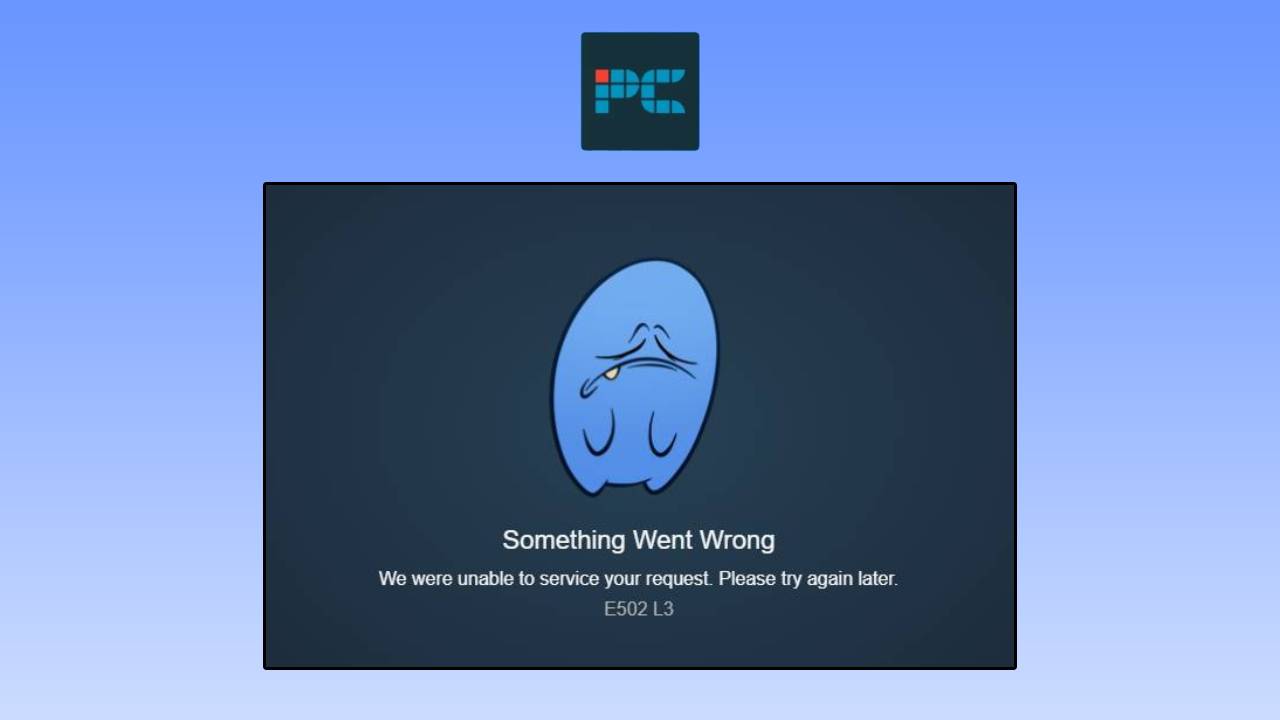
Few things are as frustrating for PC gamers as launching Steam, poised for adventure, only to be met by a cryptic error message. Among the most perplexing is Steam Error E502 L3. This vexing message can appear suddenly during routine activities like browsing the store, attempting a download, or simply trying to log in, leaving users to wonder: is the problem on their end, with their internet connection, or is Steam itself experiencing issues? Understanding the true nature of this error and knowing the right steps to tackle it can save precious gaming time and considerable stress.
At its core, Steam Error E502 L3 is a communication breakdown, often pointing to a server-side problem or a hiccup in the connection between your computer and Steam’s vast network. While it might look alarming, it’s usually temporary and doesn't signify a serious underlying issue with your personal gaming rig. However, distinguishing between a server outage and a local network problem is key to a swift resolution.
What is Steam Error E502 L3 and What Does It Mean?
When you encounter Steam Error E502 L3, you're essentially looking at a bad gateway or server communication error. The "E502" portion directly correlates to a standard 502 Bad Gateway HTTP status code. In the intricate world of web and network communication, a 502 error indicates that one server, acting as a gateway or proxy, received an invalid response from another server upstream that it was trying to access. Think of it like a middleman server trying to fetch information for you from another department, but getting a garbled or no response back.
The "L3" tag often signifies the specific layer or component within Steam's complex server architecture where this communication failure occurred. While the exact internal meaning is proprietary to Valve, it suggests the issue is deeper than a simple server being offline, pointing to an invalid exchange of data at a certain operational level.
In simpler terms, your Steam client (or the Steam website) attempted to communicate with one of Steam's backend servers—perhaps for user authentication, storefront data, or download initiation—and failed to receive a proper, expected response. This is why you'll most commonly see Steam Error E502 L3 when:
- Attempting to log into your Steam account.
- Browsing or accessing the Steam Store.
- Initiating or updating game downloads.
- Trying to complete a purchase.
Despite its ominous appearance, this error is frequently transient. It's often not a critical problem with your computer but rather a temporary snag in the vast digital ecosystem that powers Steam.
Why Does Steam Error E502 L3 Occur? Steam's Servers vs. Your Network
The root causes of Steam Error E502 L3 are diverse, but they predominantly revolve around server communication failures. The good news is that understanding these causes helps in diagnosing whether the problem lies with Steam's infrastructure or your local setup. This crucial distinction dictates your troubleshooting approach.
1. Steam Server Overload
The most common culprit behind Steam Error E502 L3 is sheer volume. Steam boasts millions of concurrent users globally, and during peak events, its servers can become overwhelmed. Major occurrences that frequently trigger server overload include:
- Seasonal Sales: The highly anticipated Summer, Winter, Autumn, and Spring Sales see an enormous surge in traffic as gamers flock to snatch up deals.
- Major Game Releases: The launch of a new, highly anticipated title can bring millions of players online simultaneously to download and play.
- Limited-Time Promotions & Free Weekends: Events offering free access to games for a limited period or significant discounts can also push server capacity to its limits.
When the number of requests exceeds the server's processing capability, some users will inevitably receive the E502 L3 error. This explains why the issue often resolves itself after a short wait (10-30 minutes) as traffic subsides or Valve's systems adapt. For a deeper dive into how server capacity impacts your gaming experience, consider reading Why Steam Error E502 L3 Happens: Server Overload Explained.
2. Temporary Server Maintenance
Like any complex online service, Steam's backend infrastructure requires regular maintenance. Valve routinely performs updates, patches, and system optimizations. During these scheduled or unscheduled maintenance windows, specific services—such as the Steam Store, login authentication, or payment processing—may temporarily become unavailable or experience disruptions. If you encounter Steam Error E502 L3 during a known maintenance period, the issue is almost certainly on Steam’s end, and patience is your best course of action.
3. Your Network Connectivity Problems
While often server-side, sometimes the problem does indeed originate closer to home. An unstable or interrupted internet connection can prevent your PC from establishing proper communication with Steam’s servers, triggering the 502 error. Common local network culprits include:
- Weak Wi-Fi Signals: If your connection is dropping or experiencing high latency, data packets can be lost or delayed.
- Router/Modem Glitches: Your network hardware might be temporarily misbehaving, requiring a simple reboot.
- ISP Routing Issues: Problems on your Internet Service Provider's (ISP) network can impact your connectivity to specific online services.
- Packet Loss: Even short, intermittent losses of data packets can disrupt the communication handshake between your client and Steam's servers.
4. DNS Conflicts
The Domain Name System (DNS) acts as the internet's phonebook, translating human-readable website names (like steampowered.com) into numerical IP addresses that computers understand. If your computer's DNS cache is corrupted or your configured DNS servers are slow or unreliable, it can lead to difficulties in resolving Steam's server addresses, resulting in communication errors like E502 L3.
5. VPNs or Proxy Servers
While often beneficial for privacy or accessing geo-restricted content, Virtual Private Networks (VPNs) and proxy servers can sometimes interfere with Steam's connectivity. They reroute your internet traffic through external servers, which can introduce latency, lead to IP conflicts, or be blocked by Steam if detected as suspicious activity.
6. Firewall or Antivirus Interference
Your computer's firewall or antivirus software is designed to protect you from malicious threats. However, aggressive settings can sometimes mistakenly identify legitimate Steam processes or connections as threats, blocking them and leading to communication errors.
Troubleshooting Steam Error E502 L3: Server-Side Solutions
When Steam Error E502 L3 strikes, the very first step is to determine if the issue is widespread or isolated to you. The good news is that if it's a server-side problem, the fix is usually simple: wait.
1. Check Steam Server Status First
Before you dive into complex troubleshooting steps on your end, always confirm the health of Steam's servers. This is the most crucial initial action. If Steam's servers are indeed experiencing outages or heavy load, no amount of troubleshooting on your computer will help. You're effectively knocking on a closed door.
Here’s how to check:
- Official Steam Status Page: While Valve doesn't always have a real-time, public-facing status page for all services, they often communicate major outages via social media.
- Third-Party Status Websites: Sites like SteamDB.info or DownDetector.com aggregate user reports and often provide real-time status updates for various Steam services (Store, Community, Login, etc.). A quick search for "Steam server status" will point you to reliable sources.
- Social Media: Check Valve's official Twitter accounts or popular gaming forums and subreddits. If there's a widespread issue, other users will likely be reporting it.
If any of these resources indicate that the Steam Store, Community, or login servers are experiencing widespread outages, the only viable solution is to wait patiently until Valve restores service. The error will automatically disappear once the servers recover. For more detailed instructions on this vital first step, consult Fix Steam Error E502 L3: Check Steam Server Status First.
2. Practice Patience
As mentioned, server overload is a prime cause. If server status indicates heavy load but not a full outage, giving it 10-30 minutes and trying again often resolves the problem. This waiting period allows traffic to subside or Valve's automated systems to scale up resources or resolve temporary hiccups. Avoid repeatedly trying to log in or access the store during this time, as it can inadvertently contribute to the server load.
Troubleshooting Steam Error E502 L3: Client & Network Solutions
If Steam's servers appear to be operational, or if you've waited and the error persists, it's time to investigate potential issues on your local network or within your Steam client. These steps help address the "your network" aspect of the Steam Error E502 L3 dilemma.
1. Restart Your Steam Client
Often, the simplest solutions are the most effective. A full restart of the Steam client can clear temporary glitches, refresh its connection, and resolve minor software conflicts.
- Completely close Steam (click Steam > Exit from the menu).
- Wait a few seconds, then relaunch the client.
2. Power Cycle Your Network Hardware
Your router and modem are the gateways to the internet. Like any electronic device, they can become bogged down with cached data or experience minor software glitches. A power cycle can resolve many connectivity issues.
- Unplug your router and modem from their power outlets.
- Wait for at least 30-60 seconds (this is important for capacitors to fully discharge).
- Plug your modem back in first and wait for it to fully boot up (all indicator lights stable).
- Then, plug your router back in and wait for it to stabilize.
- Once your internet connection is restored, try Steam again.
3. Clear Steam's Download Cache and Web Browser Cache
Corrupted or outdated cached data can sometimes interfere with Steam's functionality, especially when trying to access the store or download content.
- Clear Download Cache: In Steam, go to Steam > Settings > Downloads > Clear Download Cache. Confirm the action. This will require you to log back into Steam.
- Clear Web Browser Cache (within Steam): Sometimes the E502 L3 error appears in the in-client web browser. Go to Steam > Settings > Web Browser > Delete Web Browser Cache and Delete All Browser Cookies.
4. Flush Your DNS Cache
If your local DNS cache has incorrect or outdated entries for Steam's servers, flushing it forces your system to fetch fresh information.
- On Windows: Open Command Prompt as an administrator (search for "cmd", right-click, "Run as administrator"). Type
ipconfig /flushdnsand press Enter. You should see a confirmation message. - On macOS: Open Terminal (Applications > Utilities > Terminal). Depending on your macOS version, you might use
sudo killall -HUP mDNSResponderorsudo dscacheutil -flushcache; sudo killall -HUP mDNSResponder. You'll need to enter your admin password.
5. Temporarily Disable VPN or Proxy Servers
If you're using a VPN or proxy, try temporarily disabling it and then attempting to access Steam. If the error resolves, the VPN/proxy was the culprit. You may need to configure your VPN to allow Steam traffic directly or choose a different server location.
6. Adjust Firewall or Antivirus Settings
Your security software might be too restrictive.
- Temporarily Disable: As a test, temporarily disable your firewall and antivirus software. If Steam works, you've found the cause.
- Add Exceptions: Re-enable your security software and add exceptions for the Steam client and relevant game executables. Consult your software's documentation for specific instructions.
7. Change DNS Servers
If your ISP's default DNS servers are unreliable, switching to public DNS servers (like Google DNS or Cloudflare DNS) can often improve connection stability and speed.
- Google DNS: Primary 8.8.8.8, Secondary 8.8.4.4
- Cloudflare DNS: Primary 1.1.1.1, Secondary 1.0.0.1
Instructions for changing DNS vary by operating system and router, but a quick online search for "change DNS [your OS]" will guide you.
8. Switch to a Wired Connection (If Using Wi-Fi)
Wi-Fi connections can be prone to interference and signal degradation. If you're on Wi-Fi, try connecting your PC directly to your router with an Ethernet cable. This eliminates potential wireless issues as a factor.
Conclusion
Encountering Steam Error E502 L3 can be a momentary setback for any gamer, but with a systematic approach, it's usually solvable. Remember to first determine whether the issue lies with Steam's vast server network—often the case during peak traffic or maintenance—or with your local internet connection or client settings. By methodically checking server status, practicing patience, and then moving through client and network-specific troubleshooting steps, you can quickly diagnose and resolve the E502 L3 error, getting you back to your games with minimal fuss. Happy gaming!